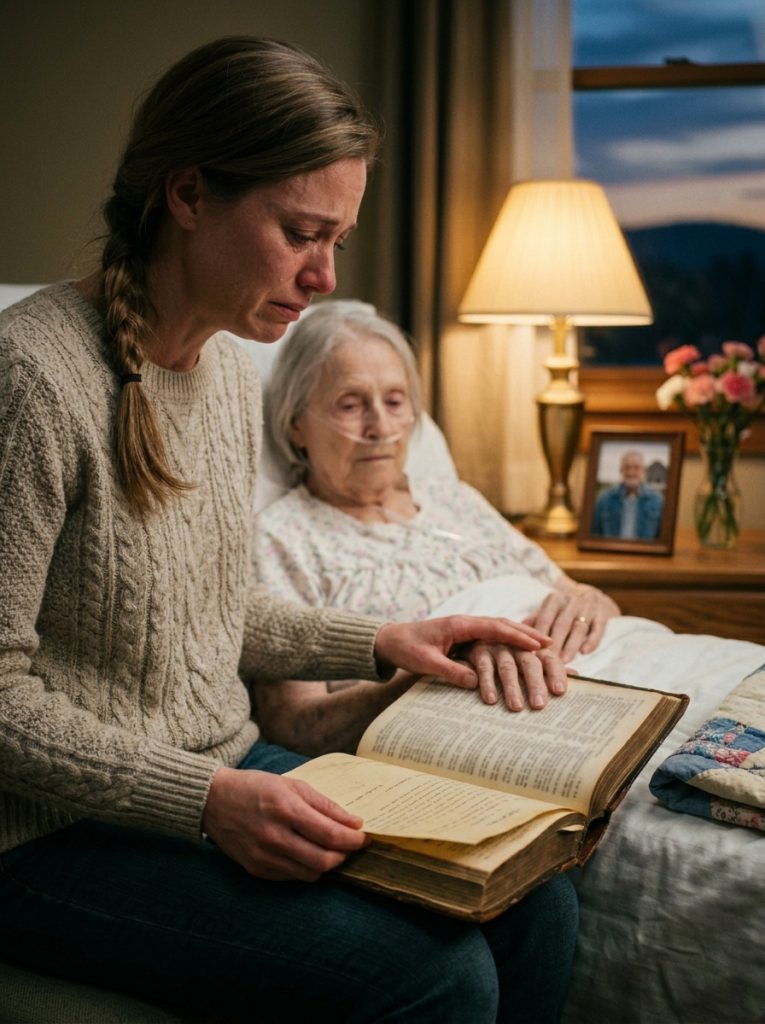
I read the deed three times before the words would hold still.
One hundred and sixty acres. The Caldwell homestead, described by the creek and the ridge line and the old oak the way deeds were written back then, like love letters to dirt. Granted clear to Elias Caldwell. And clipped behind it, the receipt — every dollar of the mortgage paid, stamped and dated by the county in the spring of 1971.
Paid in full. Eleven years before anyone told my grandfather he’d lost it.
“Grandma,” I said softly. “How long have you known?”
Ruth’s eyes had drifted half closed, but her hand was still warm on the page.
“Since after he passed,” she breathed. “Found it cleaning out the Bible box. Couldn’t make sense of it. So I asked the lawyer’s boy, quiet.”
She told it to me in pieces, resting between each one.
My grandfather’s older brother, Marcus, had wanted that land his whole life. In 1971 he worked at the county office. When Eli paid off the note, Marcus pulled the recorded satisfaction from the file and let a forged foreclosure stand in its place — then sold the “bank-owned” land to a man who paid him under the table. He told Eli the paperwork was beyond saving. He told him he’d signed it away in a bad season and was too proud to remember.
And my grandfather, who trusted his brother more than his own memory, believed him.
He spent the last years of his life thinking he was the man who lost the family land. He apologized to the dirt. He died ashamed of a failure that never happened.
“Why didn’t you fight it then?” I asked. “When you found this?”
“Eighty-one years old and no money for a lawyer,” she said. “And the man who bought it was already dead, and his children, and their children.” Her thumb moved across the page. “I was waiting. For somebody young enough to carry it. Somebody who’d believe me.”
She looked at me then, clear as the day I was born.
“There you were.”
I held her hand until the nurse came to check her vitals, and I told her everything I was going to do. I told her I’d take the deed to a real estate attorney Monday morning. That a recorded satisfaction of mortgage doesn’t expire. That the developer’s quiet title would shatter the second this surfaced. That we’d clear Eli’s name in the public record where the lie still lived.
She smiled. She said his name once, soft, the way you’d say it across a porch at dusk.
Ruth Caldwell died a little after three that morning, with the Bible still open on the bed and my hand in hers.
She held on long enough to hand it to me. Not one hour longer.
The lawyer confirmed everything within the week. The forged foreclosure was a fraud on the record; the paid receipt and original deed were ironclad. The development company, faced with a 1971 satisfaction and a chain of title built on a crime, did not want the fight or the headlines. The relinquishment papers I’d driven down to sign became, instead, the documents that gave the homestead back.
The county recorded the 1971 satisfaction it should have entered fifty-five years ago, and struck the forged foreclosure from the books. On paper, at last, the lie is gone. Some clerk I’ll never meet typed my grandfather back into the truth, one keystroke at a time.
I drove the corrected record out to the county historical society too, so it sits in the public file beside the old fraud, where anyone who ever whispered that Eli Caldwell drank the land away can read what really happened.
We won. That’s the word people keep using.
But I drove out to the old place last Sunday and stood in the high grass where the porch used to be, and I couldn’t make the word fit.
Because the man who paid for that land with eleven years of his life never got to know he hadn’t lost it. And the woman who guarded the truth for thirty years got to hold the proof for one evening before she let go.
I had it engraved on a small stone bench, set under the old oak that marks the property line in the deed.
ELIAS CALDWELL. HE NEVER LOST IT. HE WAS ROBBED, AND HE IS HOME.
I go out there now and read where the begats end, the way she told me to. And I think about how some truths arrive exactly on time — just for everyone except the people who needed them most.
The land is ours again. I only wish the two who earned it had lived to feel the sun on it one more time.